
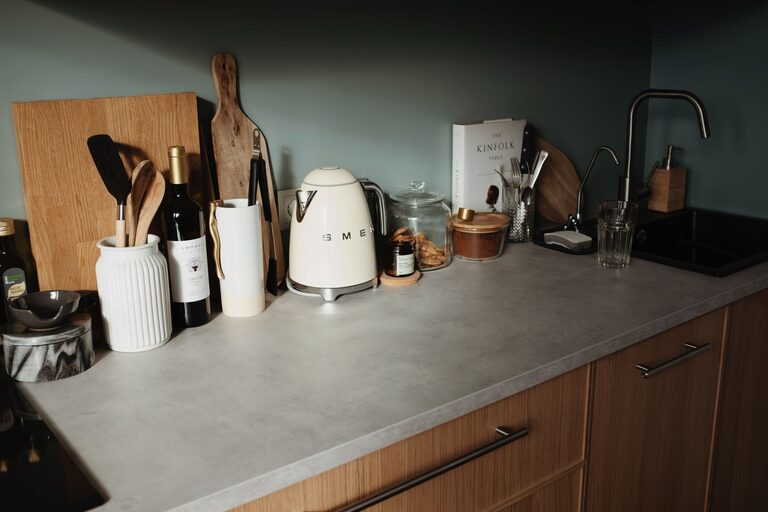
A small kitchen can be comfortable, practical, and enjoyable to use when every tool has a purpose. The key is not to fill the space with single-use gadgets, but to choose reliable items that can handle several tasks. With the right selection, even a compact kitchen can support everyday cooking, simple baking, meal preparation, and easy cleanup.
Start With the Basics
Before buying specialty equipment, focus on tools you will use regularly. A small kitchen benefits from a practical foundation of versatile items rather than a large collection of appliances.
Chef’s Knife
A good chef’s knife is one of the most useful tools in any kitchen. It can chop vegetables, slice fruit, mince herbs, and prepare meat or other ingredients. Choose a comfortable knife with a blade length that feels easy to control.
A knife sharpener or honing tool can help maintain its edge. Store the knife safely in a blade guard, drawer insert, or compact magnetic strip. Avoid placing loose knives in a crowded drawer, where they can become difficult to find and may damage other items.
Cutting Board
Choose a cutting board that is large enough for everyday preparation but small enough to store easily. A board with a handle or hanging hole can be kept on a wall or placed upright beside other kitchen items.
If possible, keep one board for general food preparation and another for raw meat or seafood. This makes cleaning and food organization easier. Plastic boards are often lightweight and dishwasher-safe, while wood boards can provide a sturdy surface for chopping.
Measuring Tools
Measuring cups and spoons are essential for cooking and baking. Look for nesting sets that fit inside one another to save drawer space. A liquid measuring cup is also useful for water, milk, oils, and other pourable ingredients.
A compact kitchen scale can be especially helpful for baking and portioning ingredients. Digital models are usually easy to store and can provide accurate measurements without taking up much space.
Choose Flexible Cookware
Cookware should match the size of your kitchen, household, and cooking habits. A few well-chosen pieces can cover most everyday meals.
One Quality Skillet
A medium or large skillet can be used for sautéing vegetables, cooking eggs, browning ingredients, preparing sauces, and reheating leftovers. Choose a size that fits your cooktop and gives you enough room to stir comfortably.
A skillet with a lid is even more useful. The lid can help simmer food, steam ingredients, and keep meals warm. If your kitchen has limited cabinet space, consider a pan with a removable handle or one designed for stacking.
One Saucepan
A saucepan is useful for heating soup, cooking grains, boiling eggs, making oatmeal, and preparing sauces. A medium-sized pan with a lid will handle many common tasks without taking up too much room.
If you often cook pasta, rice, or large batches of soup, add a stockpot only when needed. Otherwise, a deep saucepan may provide enough capacity for regular meals.
One Baking Sheet
A rimmed baking sheet can do much more than bake cookies. Use it for roasted vegetables, sheet-pan meals, toast, baked snacks, and food preparation. The raised edges help contain oils and ingredients.
A baking sheet can also serve as a temporary work surface when you need to organize ingredients. Choose one that fits comfortably in your oven and has a design that can be stored vertically.
Ovenproof Dish
An ovenproof baking dish is useful for casseroles, baked pasta, roasted vegetables, and simple desserts. Select a size that works for your household rather than buying several large dishes.
A dish with a lid can help with storage and reduce the need for extra containers. If the lid is not oven-safe, remove it before heating and use foil or another suitable cover when necessary.
Add Space-Saving Prep Tools
Small tools can save time, but they should earn their place by serving more than one purpose.
Mixing Bowls
A nesting set of mixing bowls takes up less space than separate containers. Use them for combining ingredients, washing produce, serving salads, or storing leftovers temporarily.
Stainless steel bowls are lightweight and durable. Glass bowls can double as serving dishes and may be suitable for some heating tasks, depending on the manufacturer’s instructions.
Box Grater
A box grater can shred cheese and vegetables, create fine crumbs, and zest some ingredients. Its multiple sides make it more useful than a single-purpose grater.
For kitchens with very little storage, a flat grater may be easier to keep in a drawer. Choose a model with a stable base and a handle that is comfortable to hold.
Colander
A compact colander is useful for draining pasta, rinsing produce, washing beans, and straining ingredients. Collapsible silicone models can be convenient because they flatten for storage.
Make sure the colander fits securely in your sink or over a bowl. A poor fit can make draining hot food awkward and unsafe.
Tongs and Spatulas
A pair of sturdy tongs can turn food, serve pasta, toss salads, and handle hot ingredients. Look for a locking design if you want to save drawer space.
A heat-resistant spatula is useful for stirring, flipping, scraping, and serving. A flexible silicone spatula can also help remove sauces and batters from bowls, reducing waste and cleanup.
Keep a Compact Appliance Collection
Appliances can quickly take over a small kitchen, so select them based on how often you will use them.
Electric Kettle
An electric kettle can quickly heat water for tea, coffee, oatmeal, noodles, and cooking. It may also reduce the need to use a saucepan for small amounts of water.
Choose a compact model with a clear water-level indicator and an easy-to-clean interior. Store it near an outlet, but leave enough space around it for safe use.
Toaster Oven
A toaster oven can toast bread, reheat meals, bake small portions, and roast ingredients. It may be particularly useful when you want to avoid heating a full-size oven.
If you buy one, look for a model that fits your available counter space and has simple controls. Measure the area before purchasing, including the clearance needed around the appliance.
Immersion Blender
An immersion blender can blend soups, sauces, smoothies, and soft ingredients directly in a pot or container. Because it is smaller than a countertop blender, it is often easier to store.
Choose a model with removable parts if possible, as these are generally easier to clean. Store the blender attachment separately if it takes up less space that way.
Improve Storage and Cleanup
Efficient storage is just as important as the cooking tools themselves. Use clear containers to store grains, pasta, snacks, and other dry ingredients. Stackable containers make better use of vertical cabinet space and help you see what you have.
A few additional storage tools can make a noticeable difference:
– A magnetic strip for small metal utensils
– Drawer dividers for measuring tools and flat gadgets
– A wall-mounted rack for pans or cutting boards
– Shelf risers for creating extra cabinet levels
– A slim rolling cart for supplies that do not fit in cabinets
– Reusable food containers that nest inside one another
For cleanup, keep a small dish brush, a few reusable cloths, and a compact drying mat near the sink. Choose items that can be hung or folded when not in use.
Build Your Collection Gradually
The best small-kitchen setup reflects your cooking routine. Start with tools you use every week, then add items only when a specific need arises. Before buying something new, ask whether it can replace an existing tool, perform several tasks, or save meaningful time.
A compact kitchen does not require complicated equipment. With a quality knife, dependable cookware, flexible prep tools, and thoughtful storage, you can create a workspace that is organized and ready for everyday meals.