
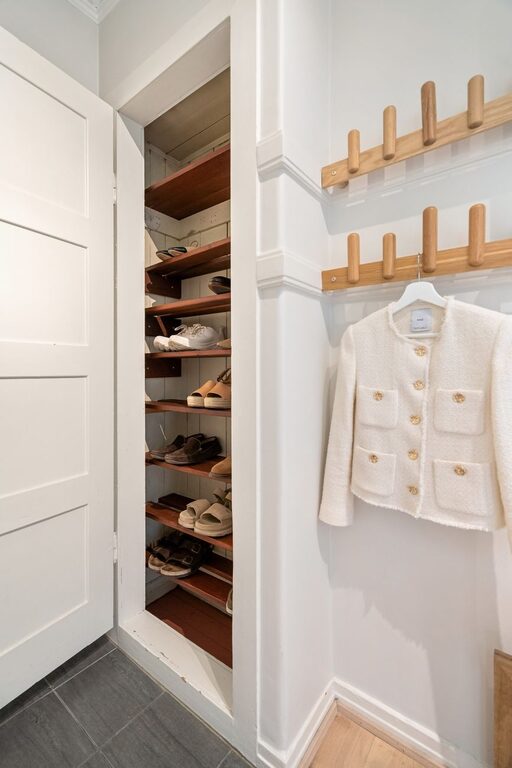
Your entryway is the first space you see when you come home and the last one you pass before heading out. Even a small entryway can quickly become crowded with shoes, coats, bags, mail, and everyday items.
The good news is that organizing this area does not require a major renovation. With a few practical storage solutions and simple routines, you can create an entryway that feels clean, useful, and welcoming.
Start by Clearing the Space
Before adding baskets, hooks, or shelves, remove everything from the entryway. Place each item in one of three groups:
– Keep in the entryway
– Move to another room
– Donate, recycle, or discard
Be selective about what stays. The entryway should hold items you use regularly, such as daily shoes, coats, bags, umbrellas, and keys. Seasonal clothing, special-occasion shoes, and rarely used accessories may be better stored elsewhere.
Once the space is clear, wipe down surfaces and clean the floor. Starting with an empty area makes it easier to decide what storage you actually need.
Create a Home for Everyday Items
The most effective entryway organization gives each frequently used item a designated place. When items have a clear home, they are easier to put away and find later.
Consider assigning specific areas for:
– Keys
– Wallets and sunglasses
– Shoes
– Coats and jackets
– Backpacks and handbags
– Umbrellas
– Pet supplies
Try to keep these areas close to the door so putting things away takes only a few seconds. A small tray can hold keys and sunglasses, while a wall hook can keep a bag from landing on the floor.
Use Wall Space for Storage
If your entryway is narrow, wall storage can help you make the most of the available space. It keeps belongings off the floor while making them easy to reach.
Add Hooks
Hooks are one of the simplest entryway storage options. Install several at a comfortable height for coats, hats, scarves, and bags. If children use the entryway, add lower hooks so they can manage their own belongings.
Choose hooks that match your needs. Larger hooks work well for coats and backpacks, while smaller hooks are useful for keys, dog leashes, or lightweight accessories.
Install a Shelf
A wall shelf can provide space for baskets, decorative items, or small containers. Place a tray on the shelf for keys and other pocket items. Baskets can hold gloves, hats, and seasonal accessories.
Avoid filling the shelf completely. Leaving some open space makes the entryway look less crowded and keeps the items you use most visible.
Consider a Pegboard
A pegboard offers flexible storage because hooks and small shelves can be moved as your needs change. It works well for households that need to organize several types of items in one compact area.
Organize Shoes by Frequency of Use
Shoes are often the biggest source of entryway clutter. Instead of keeping every pair near the door, store only the shoes used most often in this area.
A shoe rack, narrow cabinet, or set of cubbies can keep pairs together and off the floor. If you have limited space, use a vertical shoe organizer or a slim rack designed for narrow areas.
For a simple system, create three categories:
- Daily shoes
- Occasional shoes
- Seasonal shoes
Keep daily shoes in the entryway and move the other categories to a closet or bedroom storage area. Encourage household members to keep only one or two pairs near the door at a time.
Add Baskets for Small Accessories
Small items can quickly make an entryway look untidy. Baskets provide a simple way to group similar belongings and hide visual clutter.
Use separate baskets for:
– Hats and gloves
– Scarves
– Reusable shopping bags
– Pet accessories
– Sports items
– Outdoor toys
Labeling baskets can be helpful, especially when several people share the space. Labels do not need to be elaborate. Simple words such as “Hats,” “Bags,” or “Winter Items” are easy for everyone to understand.
Choose baskets that fit your storage area. Shallow baskets work well on shelves, while larger bins may be better for a bench or cabinet.
Create a Drop Zone for Mail and Paper
Mail and papers can easily collect on a console table or kitchen counter. Set up a small drop zone in the entryway to prevent this.
A wall-mounted file holder or a few labeled trays can separate incoming mail, items to review, and papers that need to leave the house. Recycle unwanted envelopes and flyers as soon as possible.
Try to process mail regularly rather than allowing it to pile up. A quick review every few days can keep the system manageable.
Make Use of Furniture With Hidden Storage
Furniture can add both function and comfort to an entryway. A storage bench, console table, or narrow cabinet can provide room for shoes and accessories while keeping the area organized.
Storage Bench
A bench gives you a place to sit while putting on shoes. Choose one with drawers, shelves, or a lift-up seat for hidden storage. Use containers inside to keep small items separated.
Console Table
A slim console table works well in a wider entryway. Keep the surface limited to a tray, lamp, or small decorative item. Use drawers or baskets underneath for daily essentials.
Narrow Cabinet
A cabinet with doors can hide shoes, bags, and other belongings. Measure the available space before buying one, and make sure doors can open without blocking the walkway.
Keep the Floor Easy to Clean
A durable doormat can catch dirt and moisture before it spreads into the rest of your home. Choose a mat that fits inside or just outside the door without creating a tripping hazard.
If your entryway receives a lot of outdoor traffic, place a washable runner nearby. A small boot tray can collect water, snow, or mud from wet footwear.
Keep cleaning supplies accessible but out of sight. A small brush, cloth, or handheld vacuum stored in a nearby closet can make quick cleanups easier.
Use a Simple Daily Reset
Even a well-organized entryway can become messy without a regular routine. A daily reset should take only a few minutes.
Before going to bed or after arriving home, try to:
– Return shoes to the rack
– Hang coats and bags
– Place keys in their tray
– Sort or recycle mail
– Remove items that belong elsewhere
– Clear the floor
Encourage everyone in the household to follow the same system. Organization is easier to maintain when the storage arrangement is simple and consistent.
Review the Space Each Season
Your entryway needs may change throughout the year. At the start of each season, remove items that are no longer useful and replace them with weather-appropriate belongings.
For example, store heavy coats and winter accessories when warmer weather arrives. Bring out lightweight jackets, sun hats, or umbrellas as needed.
This seasonal review also gives you a chance to check whether your storage system is working. If shoes continue to pile up or bags have no clear place, adjust the setup rather than adding more clutter.
Keep the Design Simple
An organized entryway does not need to look strictly practical. Add a small plant, framed print, mirror, or decorative bowl to make the space feel welcoming. Just be careful not to let decorative items interfere with storage or movement.
The best entryway is one that supports your daily routine. Focus on easy-to-reach storage, clear categories, and a small number of belongings. With a few thoughtful changes and a quick daily reset, you can keep this busy area neat and useful.