
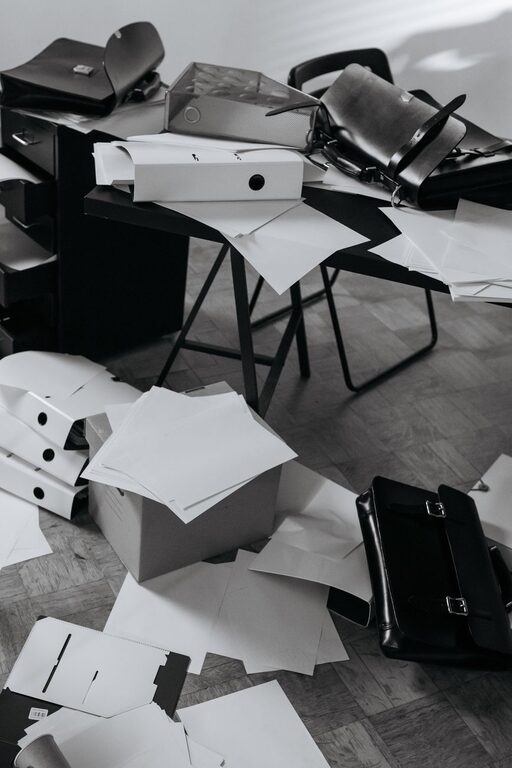
Paper clutter can build up quickly. Mail, receipts, school notices, instruction manuals, coupons, and printed documents often land in piles before you have time to sort them. Before long, kitchen counters and desks become crowded with papers that are difficult to manage.
The good news is that you do not need a complicated filing system to regain control. A few simple habits can reduce the amount of paper entering your home and make the papers you keep much easier to find.
Start With One Small Area
It is tempting to tackle every paper pile at once, but a smaller project is easier to finish. Choose one drawer, countertop, basket, or section of your desk.
Gather all the papers from that area and place them in one spot. This gives you a clear view of what you have and prevents you from moving the clutter from one location to another.
Set aside 20 to 30 minutes for the first session. If you have more papers than expected, stop when the time is up and continue another day. Regular progress is more useful than trying to complete the entire home in one weekend.
Use Four Simple Sorting Categories
Create four piles or containers:
– Action: Papers that require a response, payment, signature, appointment, or other task
– Keep: Documents you may need for reference
– Scan: Papers worth saving digitally instead of physically
– Recycle: Papers you no longer need
Do not spend too much time making decisions during the first sort. The goal is to separate papers into broad categories. You can organize the “Keep” and “Scan” piles more carefully afterward.
If you are unsure about a document, place it in a temporary review folder. Label the folder with a future review date, such as three months from now. This prevents uncertain papers from returning to your everyday surfaces.
Create an Everyday Paper Station
Choose one location for incoming papers. This might be a basket near the entrance, a wall organizer, or a small tray on a desk.
Ask everyone in the household to place new papers in this location instead of leaving them on counters or tables. A single collection point makes sorting easier and prevents papers from spreading throughout the home.
Keep the station simple. You may need only:
– One container for incoming papers
– One folder for action items
– One folder for documents to file
– A recycling bin
– A pen for writing reminders
Try to sort the incoming papers at least once or twice a week. The longer papers sit untouched, the more likely they are to become a large, unmanageable pile.
Deal With Action Papers Immediately
Action papers are often the most important and the easiest to lose. When you find one, decide what needs to happen next.
You can:
– Complete the task right away if it takes only a few minutes
– Add a reminder to your calendar
– Place it in an action folder
– Assign it to a household member
– Take a photo of the information if you only need it temporarily
Write the next step directly on the paper, such as “Call,” “Sign,” or “Return by Friday.” A clear action turns a vague reminder into a manageable task.
Keep the action folder in a visible location, but avoid leaving individual papers scattered around the house. Review the folder on a regular schedule so tasks do not disappear from view.
Reduce Paper Before It Enters Your Home
The easiest paper to manage is paper you never receive. Look for ways to reduce unnecessary mail and printed materials.
Consider these options:
– Unsubscribe from catalogs and promotional mail
– Choose digital statements where available
– Turn off printed receipts when you do not need them
– Cancel outdated magazine or newsletter subscriptions
– Ask organizations to remove duplicate mailing addresses
– Stop printing online articles, tickets, and instructions unless needed
Be selective with subscriptions. If a catalog or publication is rarely used, removing it can make a noticeable difference over time.
Scan Important Reference Documents
Digital copies can reduce the need for bulky paper files. Use a phone scanning app or a home scanner to create clear, readable files.
Create a few broad digital folders, such as:
– Home
– School
– Vehicles
– Warranties
– Taxes
– Personal records
Use descriptive file names that include the document type and date. For example, “Kitchen appliance warranty 2026” is easier to find than “Scan001.”
Store digital files in a secure, regularly backed-up location. If a document contains private information, use device security and a trusted storage service. Keep physical originals when they are necessary, difficult to replace, or specifically required.
Keep a Small, Practical Filing System
A filing system does not need dozens of categories. Too many folders can make filing feel like work, which may cause papers to pile up again.
Use broad labels that match your household needs. Possible categories include:
– Home
– Transportation
– Education
– Pets
– Warranties
– Receipts
– Personal documents
Store frequently used papers near the front of the file box or cabinet. Place rarely accessed records farther back or in a separate archive container.
Use clearly labeled folders and avoid overfilling them. A folder that is too full becomes difficult to search and may encourage you to create new piles.
Handle Receipts and Manuals Quickly
Receipts and instruction manuals are common sources of paper clutter. Decide what you need before storing them.
For receipts, keep only those connected to returns, warranties, repairs, or other useful records. Recycle duplicates and receipts for everyday purchases once they are no longer needed.
For manuals, check whether the instructions are available on the manufacturer’s website. If they are, recycle the paper copy unless you prefer to keep it. Store the manuals you retain in one labeled folder rather than placing them in random drawers.
Set Up a Recycling Routine
Keep a recycling container near your paper station. This makes it easier to remove unwanted papers during the sorting process.
Before recycling, check documents for private information. Shred papers that contain personal details when appropriate, and follow local recycling guidelines for shredded paper.
Do not let the recycling pile become another form of clutter. Empty the container on a regular day, such as the evening before collection.
Schedule a Short Weekly Reset
A weekly reset can prevent paper clutter from returning. Set aside 10 to 15 minutes to complete a few basic tasks:
- Collect papers from counters, bags, and desks.
- Sort them into action, keep, scan, and recycle.
- Complete quick tasks.
- File or scan documents.
- Remove recycling and shredding.
Make the routine part of an existing habit, such as tidying after dinner or preparing for the week ahead. A short, consistent reset is easier to maintain than occasional large cleanups.
Focus on Progress, Not Perfection
Paper clutter often reflects busy schedules, not poor organization. The goal is to create a system that works for your household and is easy to repeat.
Start with one area, keep only useful papers, and give every remaining document a clear home. With a simple intake station, regular sorting, and fewer incoming papers, your surfaces can stay clearer and important documents can become much easier to locate.